
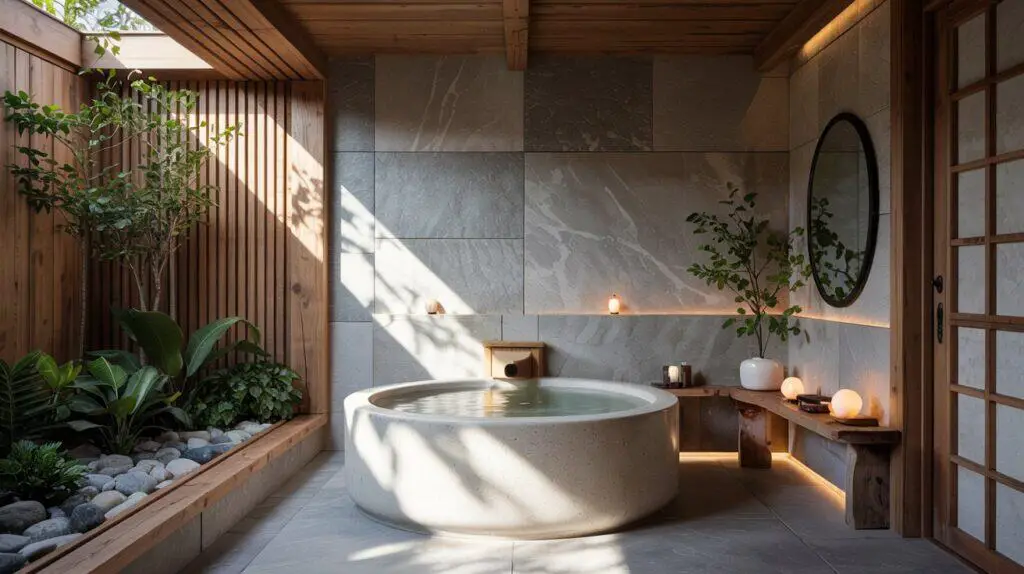
There is something timeless and deeply soothing about the Japanese approach to bathing. It’s not just a routine—it’s a ritual. A conscious pause at the end of the day. A moment to reconnect with your senses. And when that philosophy is paired with natural materials like stone, warm wood, and soft light, the result is an indoor retreat that feels like a private spa sanctuary tucked away from the rest of the world.
A Japanese soaking tub—also known as an ofuro—is more than a bathtub. It’s a space designed for stillness, warmth, and immersion. Unlike Western tubs, ofuros are deeper, more cocoon-like, and often complemented by nature views. The design you described, featuring natural stone walls, a wooden tub, exposed beams, and a window opening to lush greenery, is the very definition of a serene nature bath. It creates the illusion of bathing outdoors while keeping the cozy intimacy of an indoor space.
Here’s how this design creates such a calming, restorative environment—and how you can bring elements of this nature bath aesthetic into your own home.
Honoring the Japanese Ofuro Tradition
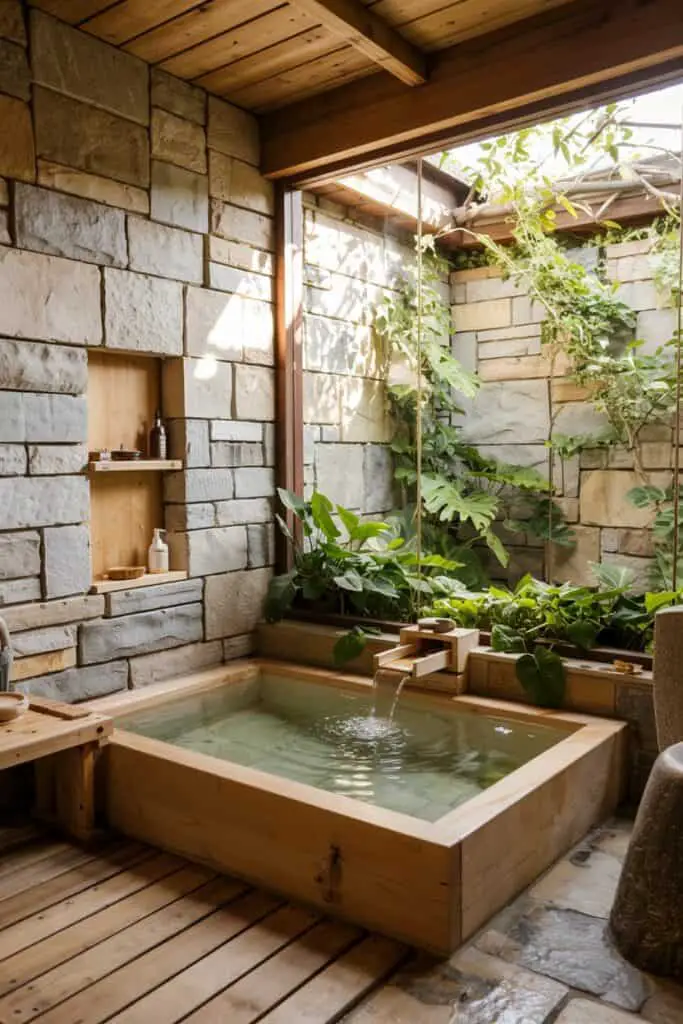
Japanese soaking tubs emphasize soaking rather than washing—an act meant to soothe the mind and body. The rectangular wooden tub in this space captures that philosophy perfectly. Its depth invites you to sit fully immersed, letting warm water rise to the shoulders as muscles unwind.
The waterfall spout pouring into the tub adds a sensory layer—sound becomes part of the experience. Instead of a harsh jet or faucet, the gentle cascade mimics a stream, grounding the moment and deepening the feeling of natural immersion.
The Power of Natural Materials: Wood, Stone, and Sunlight
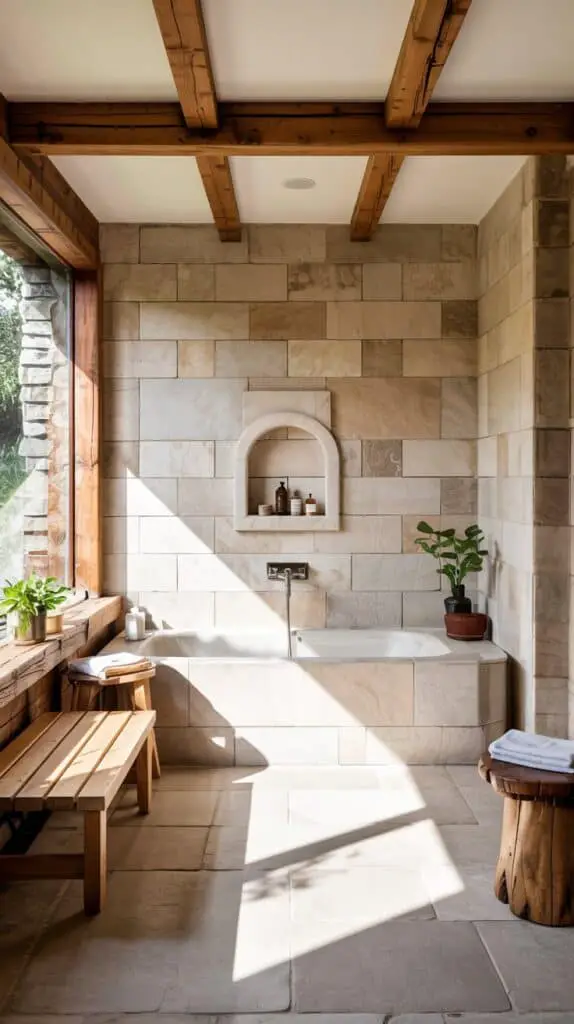
A nature bath is successful when the materials echo the outdoors. Here, wooden elements soften the space:
• a light-toned wooden tub
• wooden floorboards
• exposed wooden ceiling beams
• a carved wooden wall niche for bath products
These warm, organic tones balance the cool strength of the stone walls. Natural stone brings grounding energy, anchoring the room in earthy textures. Together, they create a harmony that is both minimal and deeply comforting—the foundation of nature-forward bathroom design.
Sunlight plays a crucial role too. The large window and the dappled shadows it creates help the space breathe. When natural light interacts with stone and wood, the room feels alive, changing subtly throughout the day.
A Garden View That Feels Like an Extension of the Tub
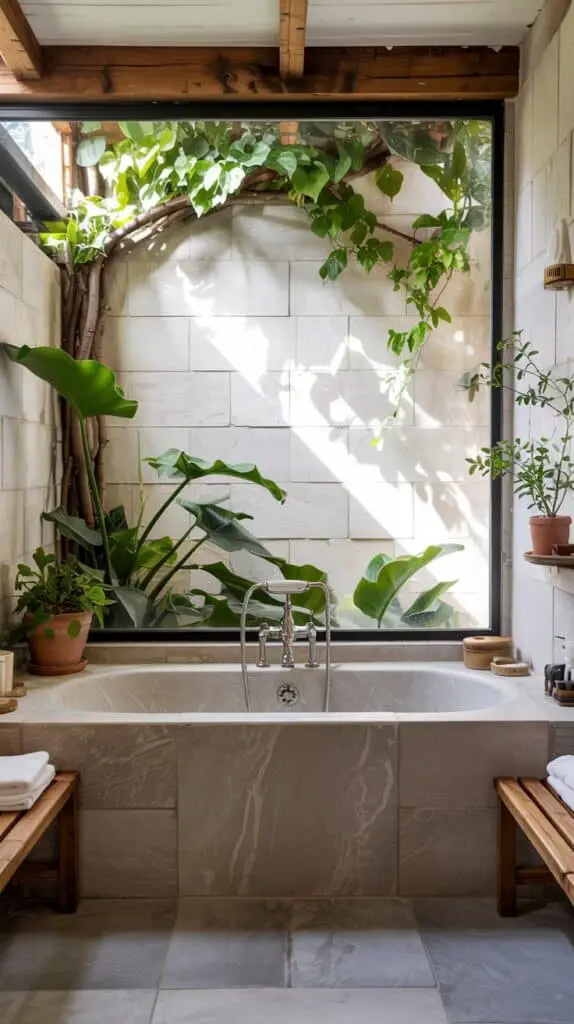
The large window is one of the most striking elements of this design. Instead of functioning purely as a window, it becomes a living backdrop—a moving painting of leaves, vines, and sunlight. The greenery outside offers visual calm, softens the stone’s texture, and expands the room’s atmosphere.
Bathing while surrounded by nature—even through glass—has been shown to reduce stress and slow the nervous system. This view becomes part of the retreat, creating a spa-like ambience without stepping outdoors.
Minimalist Layout for Mental Stillness
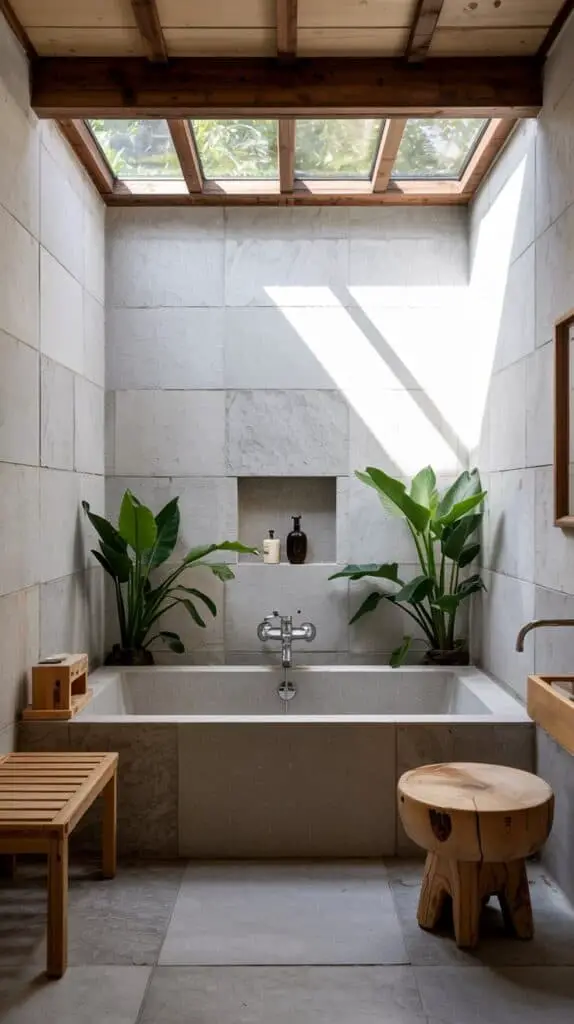
Japanese design embraces minimalism not as an aesthetic choice, but as a path to clarity. In this nature bath, the clean lines, uncluttered surfaces, and simple forms help the mind quiet down.
There are no busy patterns or unnecessary objects. Instead, every element serves a purpose:
• the wooden niche holds only essentials
• the tub sits recessed and intentional
• the stone walls stay bare and calming
This emptiness is not cold—it’s spacious. It allows the senses to relax without visual noise.
Softness Through Warm Lighting and Textures
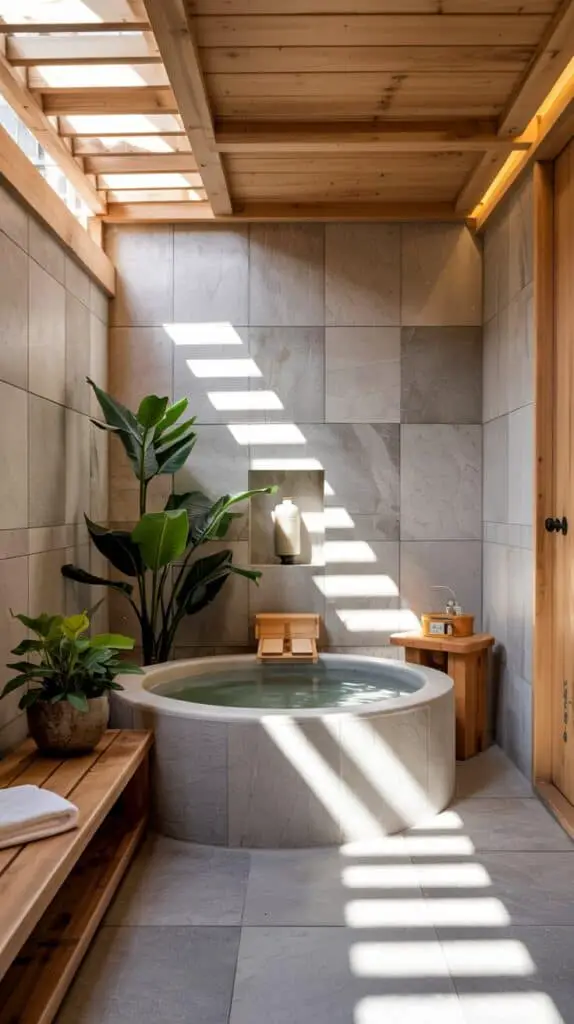
While the space is rooted in natural materials, softness comes from lighting. The natural sunlight during the day creates shifting, soothing shadows. In the evening, low warm lights along the ceiling or embedded near the niche would make the room glow gently, transforming the space into a nighttime retreat.
Texture also adds softness:
• the grain of the wood
• the subtle unevenness of the stone
• the warm matte finish of the wooden floorboards
These tactile details make the room feel warm, grounding, and inviting.
A Sensory Spa Experience at Home
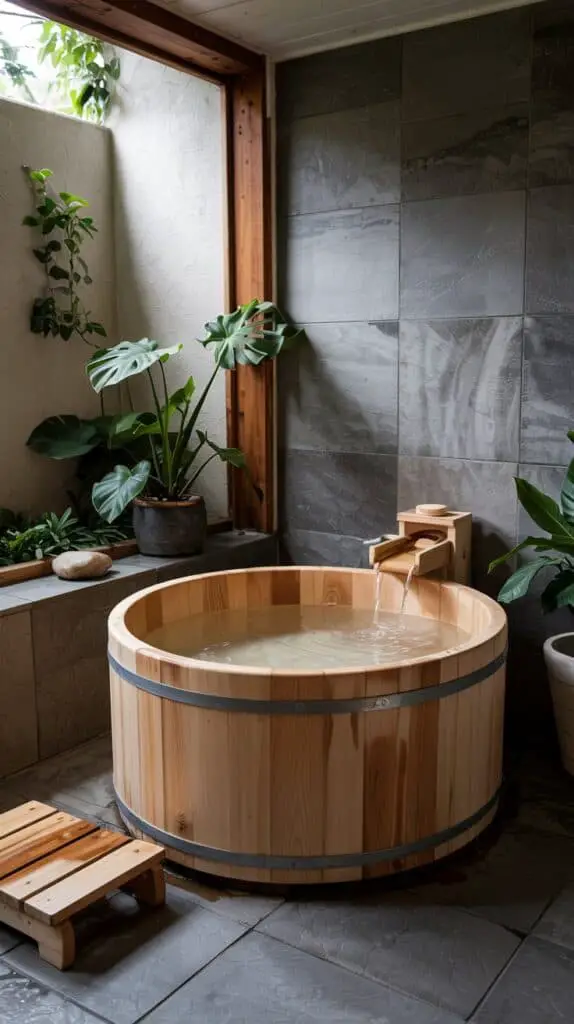
A Japanese soaking tub turns a daily activity into a spa ritual. The nature elements work together to create a peaceful sensory journey:
• the sound of water filling the tub
• the touch of smooth wood and warm water
• the scent of cedar or hinoki oils
• the sight of greenery swaying outside the window
This style of bathing encourages slowness—time to reflect, breathe, and restore.
Final Thoughts
A serene nature bath doesn’t require an enormous bathroom or elaborate fixtures. What matters is intention: choosing natural materials, embracing simplicity, letting light flow, and inviting the outdoors in. A Japanese soaking tub becomes the heart of the space—a quiet, warm refuge from the world.
With stone, wood, greenery, and soft lighting, the bathroom becomes more than a room. It becomes an indoor retreat. A sanctuary built for stillness, warmth, and the simple beauty of nature.
This lip mask quietly gets a lot of love

- A leave-on lip mask that delivers intense moisture and antioxidants while you sleep with Berry Fruit Complex, Murumuru seed and Shea butter.
- Highlighted Ingredients: Berry Mix Complex: Rich in antioxidants to help reveal smooth and supple looking lips.Coconut Oil, Shea Butter, and Murumuru Seed Butter: Help nourish & deliver lasting moisture while you sleep. Vitamin C: Helps protect from external aggressors.
- Skin Type: Normal, Dry, Combination, and Oily
- Skincare Concerns: Fine Lines/Wrinkles, Dryness, and Dullness