

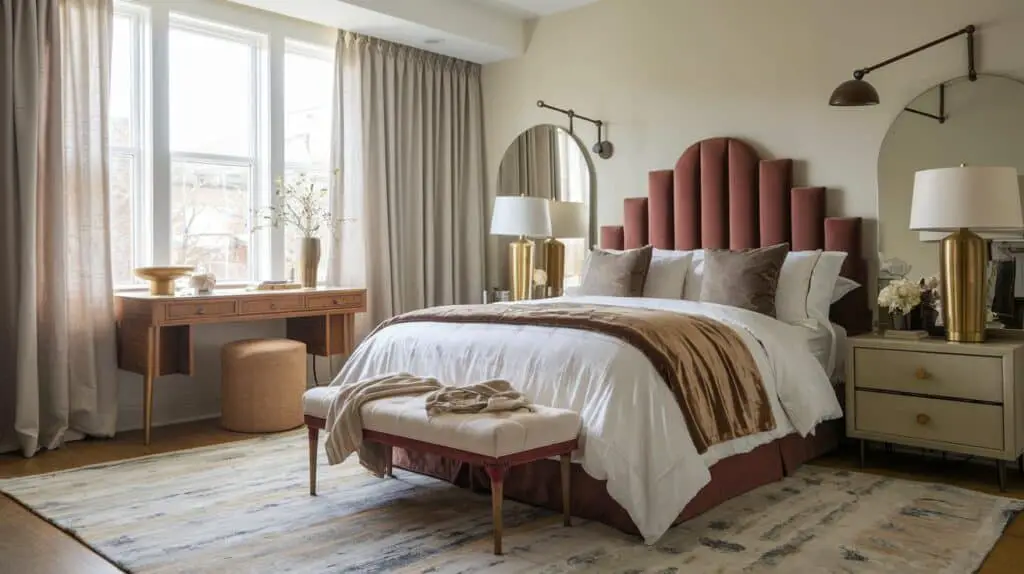
There’s something about stepping into a boutique hotel that feels like entering a carefully curated secret. Maybe it’s the oversized velvet sofa waiting in the lobby, or the way a tiny vase of wildflowers makes the whole bedroom feel like home.
Sometimes it’s as simple as that hotel-style lighting you wish you could smuggle into your own small apartment without raising suspicion at customs. I still remember one trip where my “small hotel room” was so cleverly designed I thought I’d stumbled into a magician’s studio—it was somehow spacious enough for a king-sized bed, a writing desk, and still had room for my oversized suitcase (and the inevitable shopping bags).
We crave that balance of comfort and chic when we travel, but boutique hotels go one step further: they transform your stay into an experience. Unlike big luxury hotels, which can feel polished but predictable, these spaces carry a whisper of personality.
They are about texture, storytelling, and atmosphere. That’s why modern boutique hotel interiors have become such a source of design inspiration for homes too. The real question is, how do they pull it off? Let’s explore five interiors that prove a hotel doesn’t need a grand ballroom or 200 rooms to feel unforgettable.
1. The Boutique Bedroom That Feels Bigger Than It Is
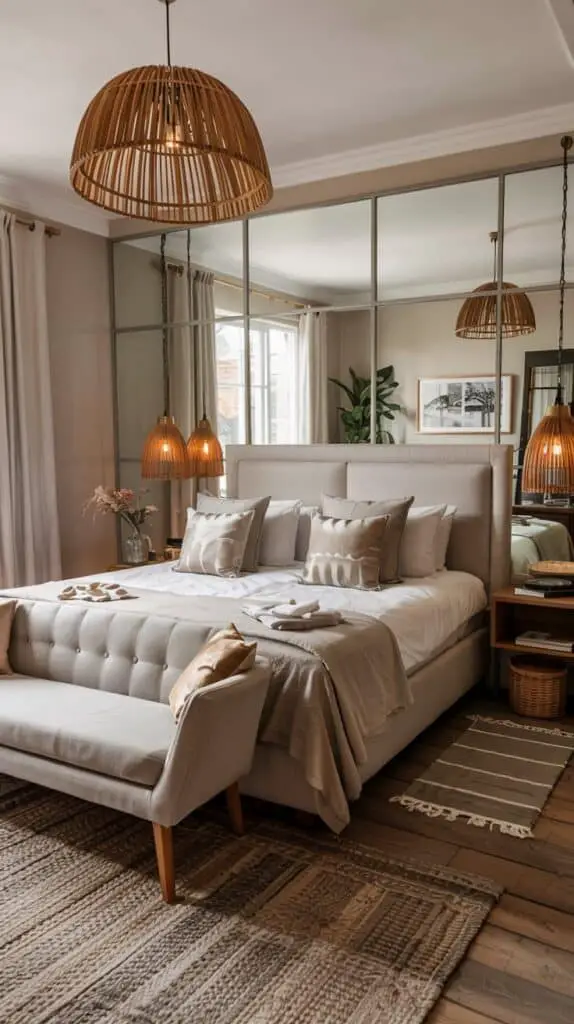
We’ve all checked into a “small hotel room” only to realize the walls might actually close in if we breathe too hard. Boutique hotels solve this with ingenuity. Think mirrors used not just to reflect but to stretch the eye, transforming a boxy space into something airy. Neutral palettes—greys, creams, and muted earth tones—keep the walls from feeling like barriers, while pops of colour (a burnt orange throw or a teal headboard) spark life.
Lighting is key. Forget one sad lamp in the corner; a boutique hotel bedroom often layers its glow. A pendant above the nightstand, a reading sconce on the wall, even a floor lamp angled just right—all these touches turn practicality into intimacy. Materials play their part too. Wood paneling softens edges, linen curtains invite natural light, and a woven rug underfoot creates warmth.
Boutique interiors aren’t afraid to play with proportion. Oversized art above the bed distracts from a modest floor plan. A mini writing desk tucked against the window suddenly feels like a “corner office.” Even bathroom design ties into the sense of expansion: glass partitions instead of solid walls give the illusion of openness without sacrificing privacy. It’s hospitality design at its smartest—showing us that hotel chic isn’t about size, but about thoughtful layering.
2. Hotel Chic in the Lobby: The New Living Room
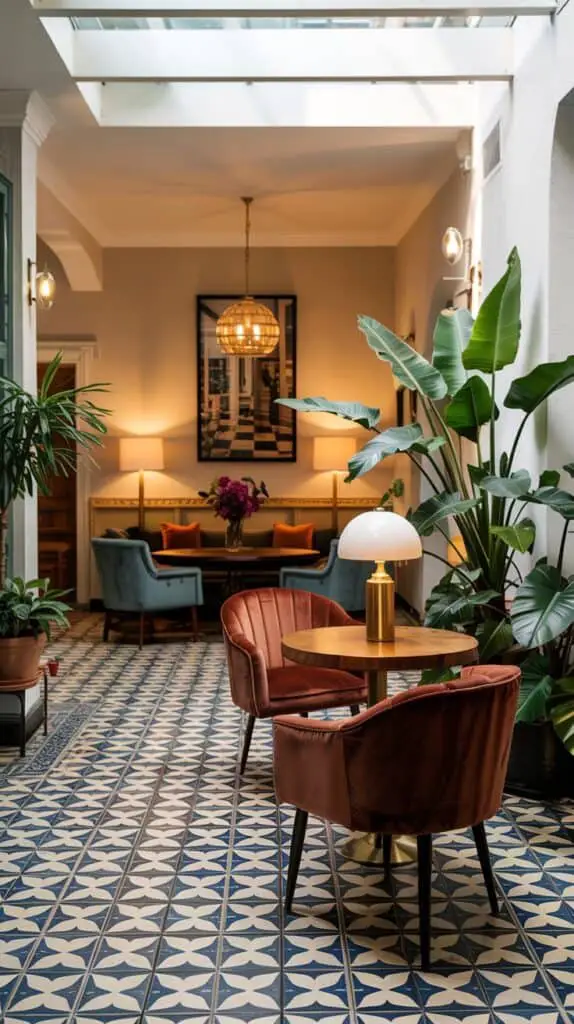
If the bedroom is where you rest, the lobby is where you arrive. Long gone are the days when a hotel lobby was just a sofa and a reception desk. Modern boutique hotels treat the lobby like the heart of the experience—equal parts living room, café, and art gallery. Step into one and you might find a Portuguese restaurant interior vibe spilling into the seating area, with tiled flooring and terracotta accents setting the tone.
Lobbies lean heavily into “zones.” A corner with velvet armchairs and stacked design books becomes an instant library. A communal table, often lined with chic task lighting, doubles as a workspace for digital nomads. Even the check-in desk disappears into the design, styled more like a bar or coffee counter.
Textures make the first impression: think stone floors paired with soft leather seating, or brushed brass light fixtures against minimalist concrete walls. Plants often spill over large ceramic pots, grounding the space in something organic. What makes it work isn’t extravagance but balance. Boutique hotels know a lobby must be both Instagram-worthy and actually useful. It’s where you linger with a latte, catch up on emails, or just soak in the mood before heading upstairs.
3. Restaurant Interiors That Steal the Show
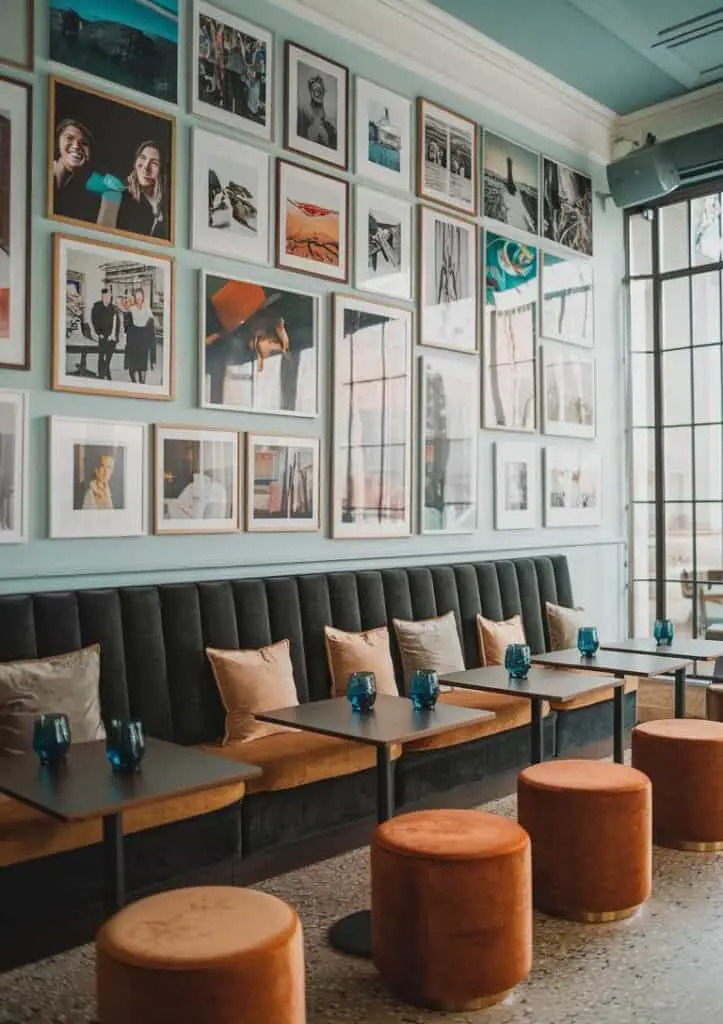
A boutique hotel without a statement restaurant feels incomplete. Sometimes it’s a moody red Italian restaurant, with leather banquettes and candlelight bouncing off wine-stained walls. Other times it’s a bright Casa Dei Sogni-style dining space where whitewashed walls and rustic wood tables carry a Mediterranean ease. These restaurants are more than dining rooms; they’re an extension of the hotel’s narrative.
Designers lean into contrasts. Exposed beams might be paired with sleek marble counters. Minimalist pendant lighting might hang above a riot of patterned tiles. Tables are often dressed simply—linen runners, mismatched ceramics, wildflower arrangements—giving guests the sense they’ve stumbled into a dinner party rather than a service-driven space.
Colour dictates the experience. Deep reds and walnut browns pull you into a cocoon of indulgence, perfect for slow dinners. Pale blues and sandy neutrals echo coastal luxury hotels interior design, inviting long lunches that stretch into afternoons. Even seating is intentional: high stools along a bar for quick bites, plush corner booths for lingering.
For boutique hotels, the restaurant interior is about memory as much as meals. The food might be seasonal, but the mood lingers—anchoring the hotel as both a destination and a story you take home.
4. Luxury With a Local Twist
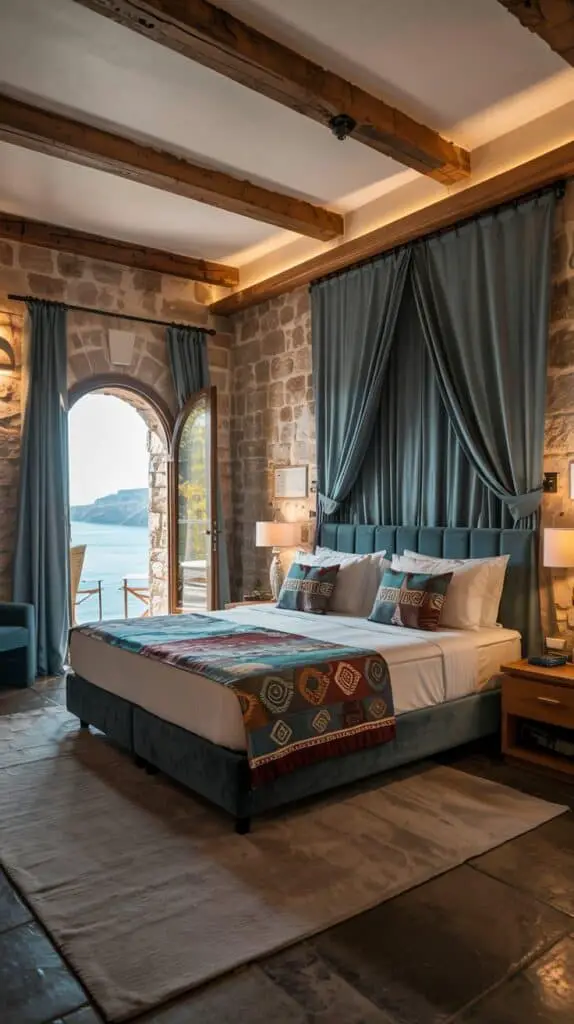
True boutique style is never generic. Walk into Monastero Santa Rosa Hotel perched above the Amalfi coast and you’ll see history stitched into the walls. Thick stone, arched windows, and centuries-old detailing coexist with contemporary furnishings. It’s luxury boutique hotel design, but rooted deeply in place.
This approach is hospitality design at its most authentic: drawing on heritage, yet not trapped by it. A former monastery becomes a spa retreat. A warehouse might transform into a loft-like boutique hotel bedroom with exposed brick, softened by velvet drapes. The design exterior often hints at what lies within—a façade painted in earthy tones or punctuated with balconies draped in bougainvillea.
Inside, modern comfort blends seamlessly with local craft. Handwoven textiles from nearby artisans cover cushions and throws. Local ceramics become bedside lamps or wall art. Even scents are curated—lavender in Provence, citrus in Lisbon, pine in the Alps. The result is not just “hotel inspiration” but cultural immersion. Guests carry home more than just memories of comfort; they carry fragments of place itself.
5. Hotel Inspiration You’ll Want to Bring Home
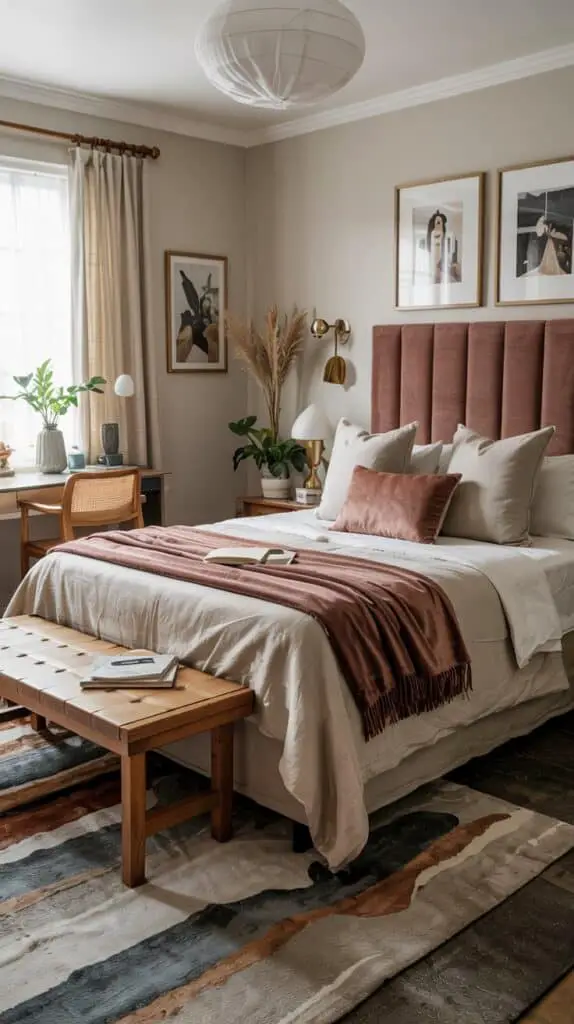
One of the most seductive things about boutique hotel interiors is how easily they sneak into your own design ideas. Ever walked into a bathroom with brass fixtures, subway tiles, and clever lighting and thought, I could do this at home? That’s the charm. Hotels become design mood boards in real life.
Small hotel rooms teach us about maximizing storage without killing style—beds with drawers underneath, floating desks, hidden wardrobes. Hotel room interior design shows us that soft-close cabinetry and clean-lined furniture keep clutter at bay. Even layering textures—linen bedding, velvet cushions, a wool throw—translates easily into your own bedroom.
Hotel style often hinges on restraint. Instead of cramming every trend into one space, boutique design favors one bold feature: a statement headboard, an accent wall, or even a dramatic light fixture. Everything else plays backup.
It’s also about rituals. A single espresso machine in the lobby becomes a reminder to carve out small luxuries in daily life. A carefully chosen scent lingers long after checkout, inspiring you to find your own “signature fragrance” at home. When done right, hotel design ideas remind us that hospitality doesn’t have to end at checkout—it can live in the way we curate our own homes.
Final Thoughts
Boutique hotel interiors thrive because they blend the practical with the poetic. They show us that a small hotel room can still feel expansive, that a lobby can be both communal and intimate, and that a restaurant interior can be as memorable as the meal itself. More than luxury, they offer atmosphere. More than style, they offer story. Whether you’re planning your next trip or just refreshing your bedroom, these interiors prove that hotel chic is less about budget and more about imagination. And maybe that’s the real secret: a little hospitality design can turn any space—even your own living room—into something worth checking into.
This lip mask quietly gets a lot of love

- A leave-on lip mask that delivers intense moisture and antioxidants while you sleep with Berry Fruit Complex, Murumuru seed and Shea butter.
- Highlighted Ingredients: Berry Mix Complex: Rich in antioxidants to help reveal smooth and supple looking lips.Coconut Oil, Shea Butter, and Murumuru Seed Butter: Help nourish & deliver lasting moisture while you sleep. Vitamin C: Helps protect from external aggressors.
- Skin Type: Normal, Dry, Combination, and Oily
- Skincare Concerns: Fine Lines/Wrinkles, Dryness, and Dullness