
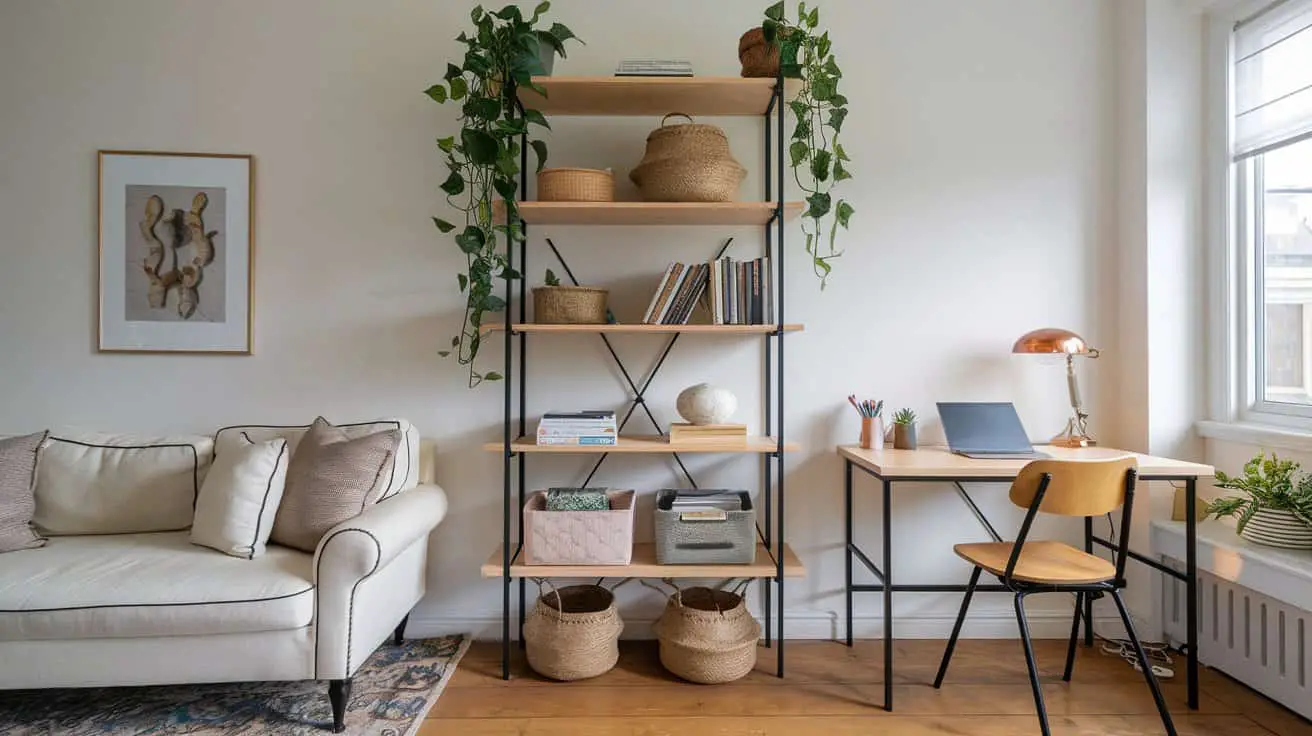
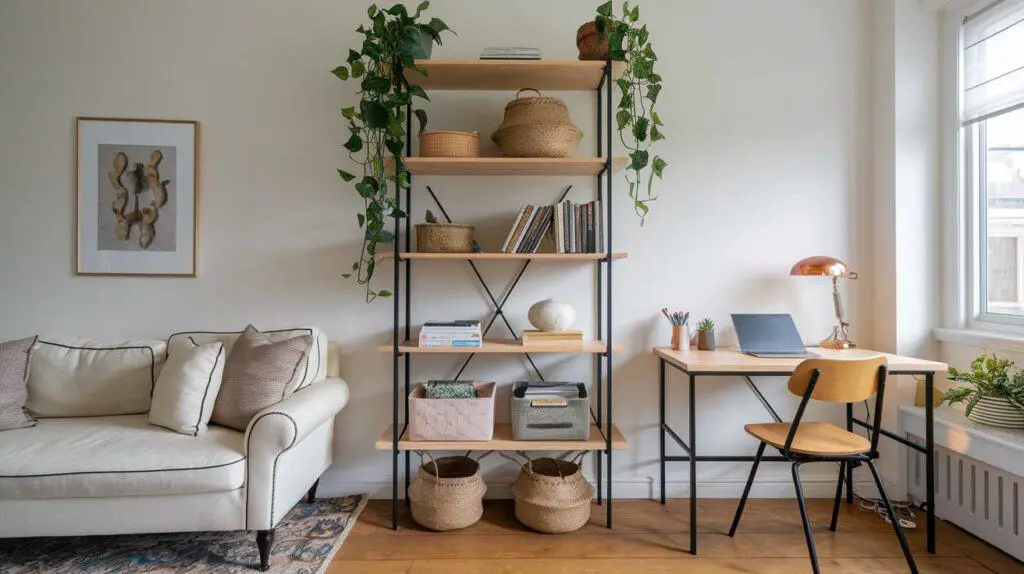
If you work from home and don’t have a separate study, the living room often becomes the default workspace. It’s convenient, but it can be tricky to keep things looking tidy and still feel like you’re not living in the office.
The good news? With some clever layout choices and a few design tricks, you can make your workspace blend beautifully into the room you relax in every night. Whether you’re setting up a single desk, sharing with a partner, or need space for more tech, these ideas will help your home feel both productive and inviting.
1. Make the Desk Part of the Room’s Design
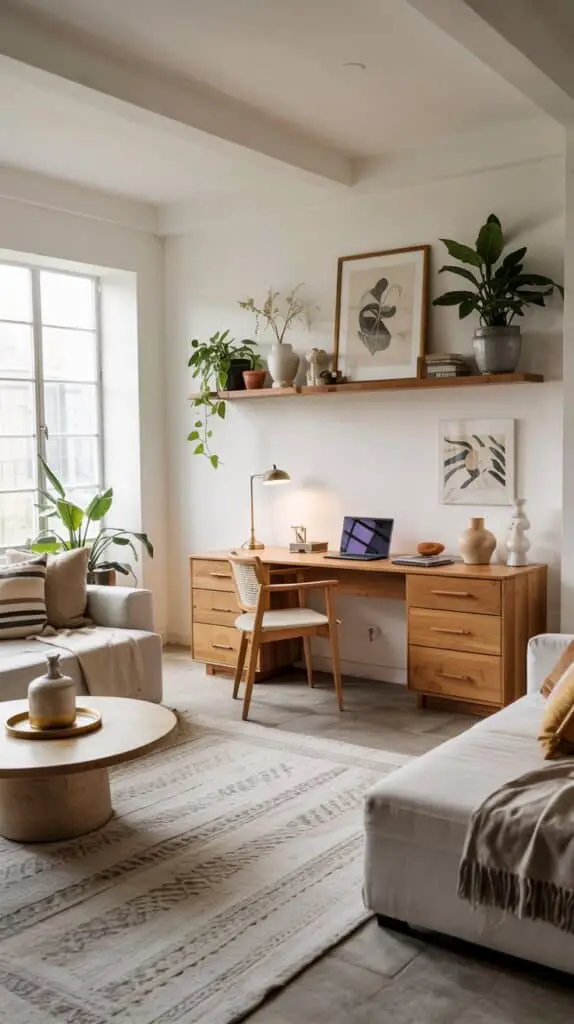
Instead of pushing a desk into an awkward corner, think about positioning it as a feature in the space. Placing it centrally or floating it behind a sofa can make it feel like intentional furniture rather than something you’re squeezing in.
Choose a style that matches the rest of your living room — warm timber for a cosy feel, or sleek black and metal for a more modern look. Keeping cables neat and storage minimal helps the desk look good even when the workday’s over.
2. Plan for Two People Without Overcrowding
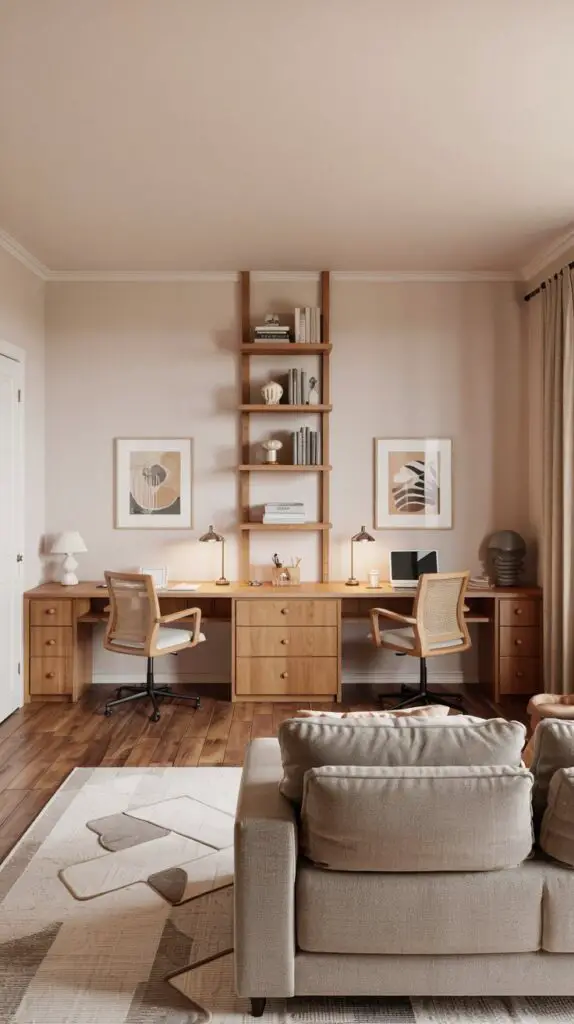
If more than one person works from home, you can still fit two work areas into the living room without it feeling cramped. A long table with chairs at each end is a simple solution, or you could set up two matching desks along one wall for a more balanced look.
To keep things harmonious, match the desk finishes and chairs, then add shared shelving or drawers in between. It makes the space more functional while still feeling part of your living room decor.
3. Combine Comfort and Efficiency in a Shared Setup

A shared home office doesn’t need to take over the whole room. An L-shaped desk in the corner works well for two people, or a single worktop that doubles as a console table when you’re off duty.
For small spaces, think about multifunctional pieces — storage ottomans, rolling carts, and matching organisers help keep everything tidy so the workspace blends in when it’s not in use.
4. Keep Multiple Screens Looking Minimal
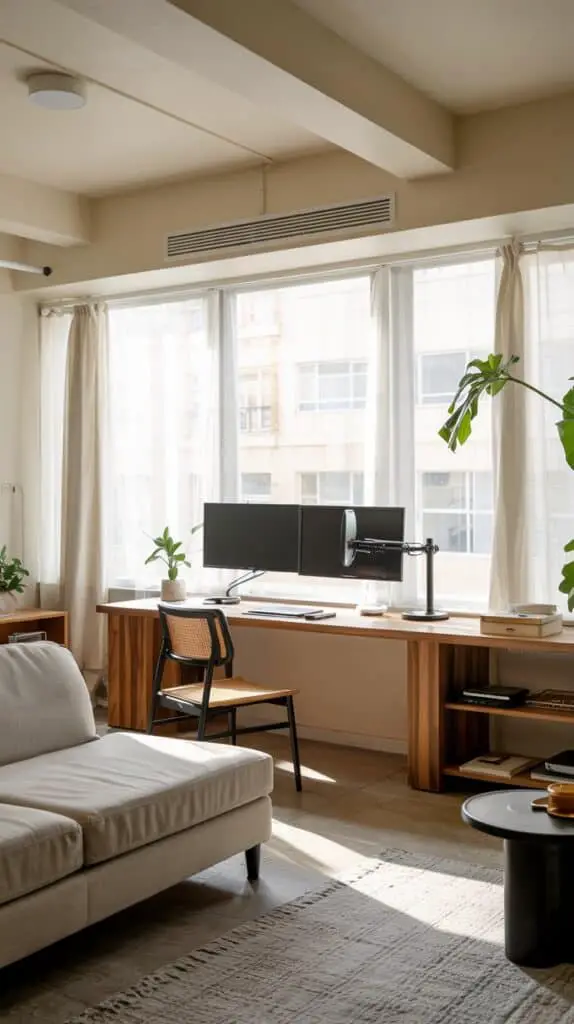
If you use two monitors, you can make them work in a living room setting without dominating the space. Choose slim, matching screens and mount them on adjustable arms so they can be pushed back when not needed.
To make the setup feel more coordinated, match the colour of your screens and accessories to the tones in your living room — it’s a small detail, but it makes a big difference in keeping the space looking unified.
5. Use Subtle Dividers to Create Boundaries

In an open-plan home, it helps to define where the “office” starts and the “living room” ends. You can use a rug under your desk, a tall plant, or a slim shelving unit to create a gentle visual barrier without blocking light or airflow.
When you’re planning the space, make sure there’s still room to move easily and that natural light isn’t blocked — good flow is just as important as good design.
Final Thoughts
Blending an office into your living room is about balance. You want it to be practical enough to work from every day, but subtle enough that you can still relax there in the evenings.
Whether it’s a central desk, a shared setup for two, or a compact corner with hidden storage, a little planning can make your living room work double duty — without it ever feeling like a corporate space.
This lip mask quietly gets a lot of love

- A leave-on lip mask that delivers intense moisture and antioxidants while you sleep with Berry Fruit Complex, Murumuru seed and Shea butter.
- Highlighted Ingredients: Berry Mix Complex: Rich in antioxidants to help reveal smooth and supple looking lips.Coconut Oil, Shea Butter, and Murumuru Seed Butter: Help nourish & deliver lasting moisture while you sleep. Vitamin C: Helps protect from external aggressors.
- Skin Type: Normal, Dry, Combination, and Oily
- Skincare Concerns: Fine Lines/Wrinkles, Dryness, and Dullness